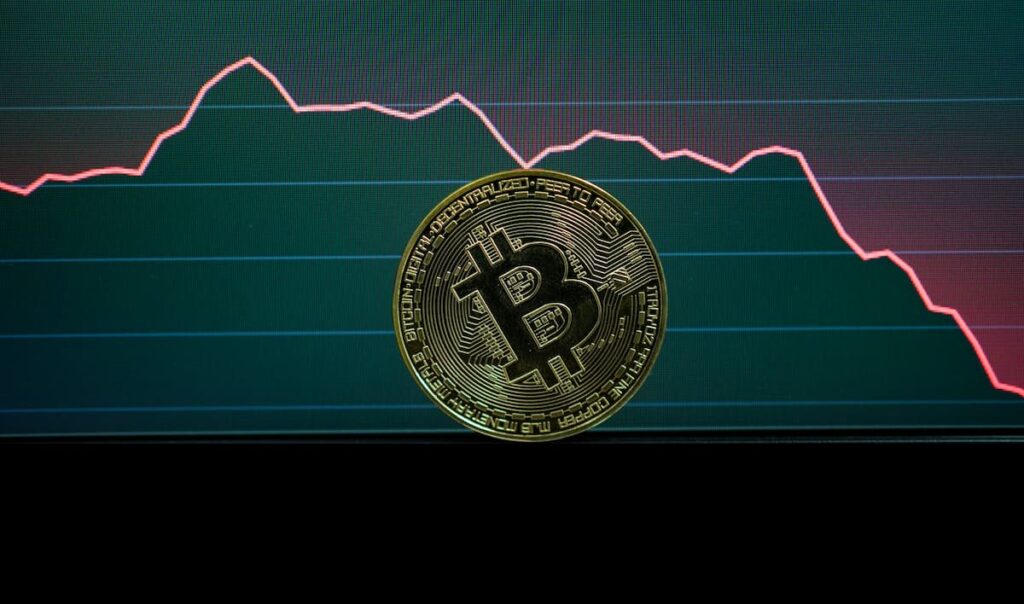
The Bitcoin crash 2026 represents one of the most dramatic sell-offs in cryptocurrency history. Bitcoin, the world’s largest digital currency, has plummeted from its October 2025 all-time high of $126,000 to around $66,000 as of mid-February 2026—a staggering 48% decline that has left investors reeling and questioning everything they thought they knew about “digital gold.”
This isn’t just another minor correction. Bitcoin experienced one of its worst single-day crashes on February 5, 2026, dropping more than 10% in 24 hours to briefly touch $60,000—the steepest one-day decline since the FTX collapse in November 2022. More than $16 billion in leveraged positions have been liquidated in just ten days, and investor sentiment has crashed to “extreme fear” levels not seen since the depths of previous bear markets.
But here’s what makes this crash particularly confusing: it’s happening at a time when, theoretically, everything should be going right for crypto. The Trump administration has embraced digital assets, comprehensive regulations are finally providing clarity, and institutional adoption continues to grow. So what’s really going on?
Let’s break down the current crisis, understand why Bitcoin is crashing despite positive fundamentals, examine the role of emerging regulations, and discuss what investors need to know right now.
WHAT’S HAPPENING WITH BITCOIN RIGHT NOW

The numbers are stark and undeniable. Bitcoin has lost half its value from its October 2025 peak, falling from $126,000 to trading around $66,000 in mid-February 2026. To put this in perspective, that’s over $1.5 trillion wiped off Bitcoin’s market capitalization in just four months.
But it’s not just about the percentage decline—it’s about how unusual this crash is given the context:
The Speed is Unprecedented: On February 5, Bitcoin registered a -6.05σ (sigma) move on the rate-of-change Z-score, placing it among the fastest single-day crashes in crypto history. In statistical terms, this was an extraordinarily rare event—the kind of move that should happen once in decades, not years.
Historical Distance from Trend: Bitcoin is currently trading -2.88σ below its 200-day moving average, a level not observed at any point in the past 10 years, including during COVID or the FTX collapse. This means Bitcoin is further below its long-term trend than it has been in over a decade—an unprecedented disconnect.
The Trump Bump Has Vanished: Remember when Bitcoin surged past $100,000 following Trump’s November 2024 election victory? Bitcoin’s bust means it lost its entire “Trump bump,” with crypto investors who cheered Trump’s victory and his pledges to remove regulations now watching those gains evaporate.
It’s Not Just Retail: Perhaps most concerning, institutional demand has reversed materially, with U.S. exchange-traded funds that purchased 46,000 Bitcoin this time last year becoming net sellers in 2026. When even institutions are selling, it signals a fundamental shift in market sentiment.
Technical Breakdown: Bitcoin has broken below its 365-day moving average for the first time since March 2022 and has declined 23% in the 83 days since the breakdown—worse than the early 2022 bear phase.
As of this writing, Bitcoin is trading around $66,000, bouncing within a range but showing little conviction for a sustained recovery. The question on every investor’s mind: is this the bottom, or is there more pain ahead?
WHY THE CRASH IS HAPPENING (MARKET FACTORS)
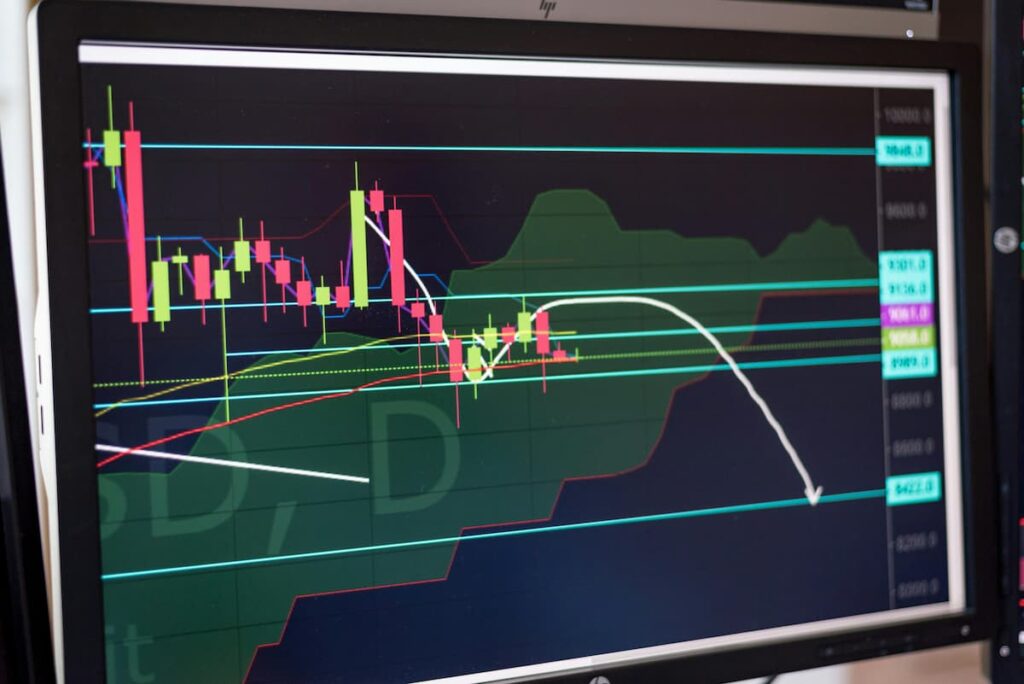
The current Bitcoin crash isn’t happening in isolation—it’s part of a broader market story that involves multiple interconnected factors. Let’s unpack each one:
1. The Digital Gold Narrative is Failing
Bitcoin has long been marketed as “digital gold”—a safe haven asset that should rise during times of uncertainty and market volatility. What’s strange is this: Bitcoin’s four-month slump has come at a time when, in theory, it had everything going for it.
Geopolitical tensions are high. Traditional markets are volatile. Gold prices have surged. Yet Bitcoin is falling, not rising. Rather than giving investors reason to buy, traders are seeing fear as a reason to sell Bitcoin, revealing doubts that Bitcoin is “digital gold” after all.
The reality is stark: Bitcoin is behaving like a high-risk technology stock, not a safe haven. When markets get nervous, investors are selling Bitcoin alongside their riskiest assets, not buying it as protection.
2. Massive Leverage Unwind
The crypto market had become extremely leveraged heading into 2026. Bitcoin futures open interest has fallen from roughly $61 billion one week ago to about $49 billion, a decline of more than 20% in notional exposure in just a few sessions.
When leverage unwinds, it creates a cascading effect. As prices fall, overleveraged positions get automatically liquidated (forcibly sold), which pushes prices lower, triggering more liquidations, creating a downward spiral. More than $2 billion of Bitcoin long and short positions have been liquidated since the crash began.
3. Profit-Taking by Early Investors
Matt Hougan, chief investment officer at Bitwise Asset Management, described this as a “full-bore, 2022-like crypto winter—set into motion by factors ranging from excess leverage to widespread profit-taking by OGs.” OGs (original gangsters) refers to early Bitcoin investors who bought at much lower prices.
After Bitcoin hit $126,000 in October 2025, many long-term holders decided it was time to cash out. This selling pressure, combined with leveraged liquidations, created a perfect storm for price collapse.
4. Correlation with Tech Stocks
Bitcoin’s price has become increasingly correlated with technology stocks, particularly high-growth tech names. The crypto market drop comes after a fall in global equities and coincided with a decline in tech stocks, with Microsoft sliding 10% after its earnings disappointed investors.
When tech stocks sell off, Bitcoin follows. This correlation undermines the narrative that Bitcoin is an independent asset class or store of value—instead, it behaves like a highly volatile tech stock.
5. The Four-Year Cycle Theory
Some analysts believe Bitcoin follows a predictable four-year cycle tied to “halving” events—when the reward for mining new Bitcoin is cut in half, typically leading to supply squeezes and price surges. The most recent halving occurred in April 2024.
Market watchers said Bitcoin is showing signs that its historical four-year cycle around halving remains intact, with Steven McClurg, CEO of Canary Capital, telling CNBC he expects Bitcoin to fall as low as $50,000 in the summer.
If the cycle holds, 2026 would be a bear year before new all-time highs in 2027-2028. While this provides some comfort to long-term believers, it offers little solace to those who bought near the top.
6. Market Sentiment Collapse
The Crypto Fear & Greed Index collapsed to 11—deep in “extreme fear” territory and among the lowest readings on record. When fear dominates, selling begets more selling regardless of fundamentals.
Psychology plays a huge role in crypto markets, which are still relatively immature and prone to emotional extremes. Right now, fear is winning.
THE ROLE OF NEW REGULATIONS
Here’s where the story gets interesting—and counterintuitive. While Bitcoin’s price is crashing, the regulatory environment for cryptocurrency in the United States is actually improving dramatically. In fact, 2026 may be remembered as the year crypto finally achieved regulatory legitimacy.
The Regulatory Revolution of 2025-2026
Under President Donald Trump’s second term, Washington has taken a noticeably more supportive stance toward crypto, with US crypto regulation entering execution mode in 2026 as Congress, regulators, and states roll out clearer rules on market structure, stablecoins, and custody.
The transformation has been remarkable:
The GENIUS Act: This federal legislation establishes comprehensive stablecoin regulation, creating clear compliance paths for dollar-backed digital currencies. The GENIUS Act lays the foundation for the democratization of crypto in the US, providing a clear regulatory framework for digital assets to reach mainstream adoption.
The CLARITY Act: In July 2025, the House approved the Digital Asset Clarity Act (CLARITY Act), a bill seeking to provide structure to the regulation of digital assets by defining the boundaries of the SEC and CFTC’s respective jurisdictions. This resolves years of regulatory confusion about which agency oversees which aspects of crypto.
SEC’s “Project Crypto”: The SEC has shifted its focus away from enforcement toward providing clearer guidance for digital asset issuers—a trend expected to continue throughout 2026, with Chairman Paul Atkins announcing “Project Crypto” to establish clearer frameworks.
Enforcement Retreat: The SEC has eased over 60% of ongoing crypto cases through pauses, reduced penalties, or outright dismissals, including high-profile actions against major exchanges. The era of “regulation by enforcement” appears to be ending.
Why Good Regulations Aren’t Helping Prices (Yet)
This creates a paradox: regulation is improving, but prices are falling. How can this be?
Matt Hougan explains: “In the ‘depths’ of a crypto winter, good news doesn’t matter. We’re not going to rally because Wall Street is hiring aggressively or Morgan Stanley is ramping up on crypto. That will matter in the long term, but not now. Crypto winters don’t end in excitement; they end in exhaustion.”
In other words, when markets are in full panic mode, positive regulatory developments get ignored. The fear has to burn itself out first. Only then will the improved regulatory framework matter for prices.
However, the regulatory improvements are real and will likely drive long-term adoption:
- Institutional Access: Regulated investment companies and advisors can now use state trust companies for custodying crypto assets, and broker-dealers may hold crypto subject to prescribed requirements.
- Banking Integration: The OCC approved five national trust bank charters in December 2025 specifically for digital asset firms, allowing crypto companies to operate as regulated banks.
- Clarity for Issuers: The SEC staff has provided no-action relief from securities registration to several digital asset issuers, clarifying that certain tokens are not securities.
The regulatory environment is the best it’s been in crypto’s history. But markets care about price action first, fundamentals later.
WHAT INVESTORS SHOULD KNOW

If you own Bitcoin or are considering buying during this crash, here’s what you need to understand:
1. This Is a Full-Scale Crypto Winter, Not a Dip
Don’t sugarcoat it. This is not a “bull market correction” or “a dip”—it is a full-bore crypto winter, similar to what happened in 2018 and 2022. These periods can last 12-18 months before recovery begins.
If you’re holding Bitcoin expecting a quick bounce back to $100,000, you may be waiting a long time. Plan accordingly.
2. Volatility Is the Price of Admission
The current drawdown has occurred alongside materially lower realized volatility than in prior bear markets, with 90-day realized volatility near 38, roughly half the levels observed during the 2022 bear market when volatility exceeded 70.
Paradoxically, this relatively “orderly” decline (compared to past crashes) might mean we haven’t seen true capitulation yet. Past Bitcoin bear markets ended with massive, panic-driven sell-offs followed by multi-year recoveries.
3. How Low Could It Go?
Analysts have varying predictions, but none are particularly optimistic for the short term:
- Barry Bannister, chief equity strategist at Stifel, wrote that Bitcoin could bottom out around $38,000—down about 70% from the peak.
- Steven McClurg, CEO of Canary Capital, expects Bitcoin to fall as low as $50,000 in the summer of 2026.
- Polymarket bettors give Bitcoin a 71% chance of reclaiming $85,000 before February ends but just 10% odds of returning to $100,000 anytime soon.
The consensus seems to be: more downside likely before any sustained recovery.
4. The 5% Rule Still Applies
Financial advisors consistently recommend that crypto should represent no more than 5% of an investment portfolio due to its extreme volatility. If your Bitcoin holdings exceed this, the current crash is a painful reminder of why position sizing matters.
5. Tax-Loss Harvesting Opportunity
If you bought Bitcoin at a higher price than it is now and sell at a loss, you can use those losses to offset gains from other investments—so-called tax-loss harvesting.
However, be aware of wash-sale rules. If you own Bitcoin directly (not through an ETF), you can sell and quickly rebuy while still realizing the tax losses. But if you own Bitcoin through an ETF, you must wait at least 30 days to repurchase to claim the losses.
6. Don’t Panic Sell (Unless You Need To)
Financial advisors suggest asking yourself: “Would I buy Bitcoin today?” If you can’t say yes, you should probably sell your holdings. This is sound advice.
However, if you invested only what you could afford to lose, believed in the long-term thesis, and don’t need the money, panic selling at the bottom is often the worst decision. Historical data shows Bitcoin has recovered from every previous crash—eventually.
7. Consider Dollar-Cost Averaging
If you believe in Bitcoin’s long-term potential, this crash presents a potential buying opportunity. Instead of trying to time the bottom (which is nearly impossible), consider dollar-cost averaging: buying fixed dollar amounts at regular intervals regardless of price.
This strategy removes emotion from the equation and ensures you buy more when prices are low and less when they’re high.
EXPERT OPINIONS AND ANALYSIS

Let’s look at what market experts and analysts are saying about the current situation:
The Optimistic View: Capitulation Signal
VanEck analysts note that Bitcoin’s distance from trend and velocity measures suggest “growing potential for stabilization rather than continued acceleration lower,” with multiple indicators reflecting “statistical stress, not structural failure.”
Their view: The worst of the panic selling may be behind us. When Bitcoin deviates this far from its long-term trend, it historically bounces back within months, not years.
By February 5, nearly 10 million Bitcoin sat underwater—a concentration of losses seen only at previous bear market bottoms, and typically where capitulation ends. Once sellers exhaust themselves, even modest buying pressure can spark sharp moves higher.
The Cautious View: More Pain Ahead
Market analyst Steven McClurg maintains that “2026 I expect to be a bear leg to the four-year cycle,” suggesting the downturn will continue through the summer before any meaningful recovery.
Barry Bannister’s prediction of a bottom around $38,000 is based on “trends and price moves during past ‘Bitcoin super-bears’—periods of steep downturns that lasted 12-18 months.”
The Measured View: It’s Cyclical
Paul Howard, Senior Director at Wincent, identifies a critical shift: “The decline in Open Interest demonstrates the reset we have seen in speculative interest. The focus appears to be back on spot for both institutions and ETFs.”
He notes that spot trading is experiencing “the busiest month in history” as “investors rather than speculators gain dominance at these lower prices.” This suggests a healthier market structure emerging from the wreckage.
“Crypto is cyclical, and experience tells us it’s never as good, or as bad as it seems,” one exchange noted—a reminder that both euphoria and panic tend to be temporary states.
The Contrarian View: Regulation Will Drive Recovery
Industry analysts note that “the democratization of digital assets in 2026 marks a new phase in crypto history, with emerging regulations paving the way for broader access while establishing clearer boundaries.”
Once the current fear subsides, the significantly improved regulatory framework could drive institutional adoption at levels never seen before. Major financial institutions that were on the sidelines due to regulatory uncertainty now have a clear path to participate.
PRACTICAL ADVICE FOR CRYPTO HOLDERS
Based on the current situation, here’s actionable advice for different types of Bitcoin investors:
If You’re Down Significantly (30%+ Loss):
- Assess Your Situation: Can you afford to hold through potentially another 6-12 months of volatility? If no, cutting losses may be the right move.
- Consider Tax Benefits: If you’re going to sell, do it strategically to harvest tax losses.
- Don’t Try to Time the Bottom: If you believe in the long-term thesis and decide to hold, don’t obsess over daily price movements.
- Review Position Sizing: If your crypto allocation has grown to be a dangerously large portion of your portfolio, rebalancing might be wise even at a loss.
If You’re Considering Buying:
- Start Small: Don’t go all-in trying to catch the falling knife. Use dollar-cost averaging.
- Have a Plan: Decide in advance what percentage of your portfolio crypto will represent and stick to it.
- Think Multi-Year: Only invest money you won’t need for 3-5 years minimum. Crypto winters can be long.
- Understand the Risks: Crypto is a volatile asset class, and investors likely shouldn’t hold more than 5% of it in their portfolios, financial advisors said.
If You’re Watching from the Sidelines:
- Stay Informed: The regulatory developments happening now will shape crypto’s future. Understanding them positions you to make better decisions later.
- Don’t Feel FOMO: Missing a crash is not missing out. There will be plenty of time to buy when markets stabilize.
- Learn from This: Study how markets behave during panic. It’s valuable education for all types of investing.
THE LONG-TERM OUTLOOK

Let’s zoom out and consider what the next 1-3 years might hold:
The Bull Case
- Historical Precedent: Bitcoin has bounced all the way back within a year and a half after each previous crash, including the 2014 Mt. Gox hack, the 2018 ICO bubble burst, and the 2021-2022 regulatory pressure and FTX scandals.
- Regulatory Clarity: The improved regulatory framework removes a major barrier to institutional adoption. Once market conditions stabilize, this could drive significant capital inflows.
- Supply Dynamics: The 2024 halving reduced new Bitcoin supply. As demand eventually recovers, reduced supply could drive prices higher.
- Institutional Infrastructure: Major banks, custodians, and financial institutions are now building crypto infrastructure. When they fully launch these services, it could bring massive new demand.
- Macro Conditions: If inflation concerns return or geopolitical tensions escalate further, Bitcoin could eventually fulfill its “digital gold” narrative—just not during this panic phase.
The Bear Case
- Broken Narrative: If Bitcoin consistently fails to act as a safe haven during market stress, the “digital gold” story loses credibility permanently.
- Regulatory Risks: While U.S. regulations are improving, global regulatory coordination remains a challenge. Harsh regulations in other major economies could limit adoption.
- Competition: Bitcoin faces increasing competition from newer cryptocurrencies, central bank digital currencies (CBDCs), and other payment innovations.
- Institutional Selling: If institutional ETFs remain net sellers through 2026, it suggests professional investors are losing faith in the asset class.
- Extended Winter: If the four-year cycle holds, Bitcoin might not see new all-time highs until 2027-2028, testing the patience of even long-term holders.
The Realistic Middle Ground
Most likely, Bitcoin will eventually recover from this crash, but the path will be volatile, unpredictable, and test the conviction of even strong believers. The improved regulatory environment is genuinely positive for long-term adoption, but it won’t prevent short-term volatility.
The key theme of 2026 is the “democratization of digital assets—making digital assets accessible to US persons without the fear of imminent enforcement action.” This is foundational work that will matter more in 2027 and beyond than it does today.
For patient, long-term investors who can stomach extreme volatility, Bitcoin may eventually reward that patience—as it has after previous crashes. For those seeking stable returns or who invested money they couldn’t afford to lose, this crash is a harsh but valuable lesson about risk management.
CONCLUSION: NAVIGATING THE CRYPTO WINTER
Bitcoin’s crash from $126,000 to $66,000 represents one of the most dramatic periods in cryptocurrency history, made all the more confusing by the fact that it’s happening while regulations are improving and institutional interest remains high.
The reality is that markets aren’t always rational in the short term. Fear and leverage create their own destructive momentum that can overwhelm positive fundamental developments. As Matt Hougan noted, “Crypto winters don’t end in excitement; they end in exhaustion.”
We’re currently in the exhaustion phase. Leverage is being purged from the system. Weak hands are selling. Fear dominates sentiment. This is painful but necessary for markets to find a sustainable bottom.
The good news? The regulatory framework being built in 2026 represents the most significant progress toward mainstream crypto adoption in the industry’s history, with pro-crypto leadership in Washington marking a potential turning point for US digital asset policy and institutional adoption.
When the current panic subsides—and it will eventually—this improved infrastructure will still be there. The question is whether you’ll be positioned to benefit from it or whether you’ll have panic-sold at the bottom.
Key Takeaways:
- Bitcoin has crashed 48% from its October 2025 high of $126,000
- This is a full crypto winter, not a temporary dip
- Multiple factors are driving the crash: leverage unwinding, profit-taking, failed safe-haven narrative, and correlation with tech stocks
- Paradoxically, cryptocurrency regulations are improving dramatically in the U.S.
- Expert predictions vary from further declines to $38,000-$50,000 before eventual recovery
- Historical precedent suggests Bitcoin recovers from every crash, but it takes time
- Only invest what you can afford to lose, limit crypto to 5% of portfolio, and think long-term
Remember: In crypto, both euphoria and panic are temporary. Stay informed, manage your risk, and make decisions based on your personal financial situation—not on fear or greed.
What’s your take on the current Bitcoin crash? Are you buying the dip, holding strong, or staying on the sidelines? Share your thoughts in the comments below.
Don’t miss our analysis of other major 2026 trends! Read our comprehensive guide: 10 Trends Shaping 2026: What You Need to Know Right Now
Subscribe to Get 2 Know Arena’s newsletter for weekly updates on cryptocurrency markets, regulatory developments, and financial trends that affect your money.
REFERENCES & FURTHER READING
Cryptocurrency Market Data & Analysis:
- CNN Business (Bitcoin Market Coverage): https://www.cnn.com/business/markets/bitcoin
- CNBC Crypto Coverage: https://www.cnbc.com/cryptocurrency/
- CoinDesk (Crypto News): https://www.coindesk.com
- VanEck Digital Assets Research: https://www.vaneck.com/us/en/blogs/digital-assets/
- CoinMarketCap (Price Data): https://coinmarketcap.com
Financial Analysis & Investment Guidance:
- Skadden 2026 Insights (Digital Assets): https://www.skadden.com/insights/publications/2026/2026-insights
- K&L Gates (Crypto Regulation): https://www.klgates.com
- Global Legal Insights (Blockchain Laws): https://www.globallegalinsights.com
Investment Education:
- Investopedia (Cryptocurrency): https://www.investopedia.com/cryptocurrency-4427699
- CoinPedia (Price Predictions & Analysis): https://coinpedia.org